

The Phu Quoc Ridgeback Dog: Challenging What You Think You Know about Dogs


The Phu Quoc Ridgeback Is Not a Pet—It’s a Working Mind
There is a fundamental misunderstanding that quietly undermines many relationships with the Phu Quoc Ridgeback, and it usually begins long before the first behavioral issue appears. It starts with a simple assumption: that this dog is, at its core, a pet in the way most people understand the term—adaptable, eager to please, and content to exist within the rhythm of a human household without requiring much deeper consideration. That assumption is where things begin to unravel.
Because what people bring home when they bring home a Phu Quoc Ridgeback is not simply a companion animal. It is a dog with a working mind—one shaped not by generations of selective breeding for compliance, but by the demands of survival, independence, and environmental awareness. This is not a dog that was designed to wait for direction. It is a dog that was designed to make decisions. And once you understand that, the entire framework through which you view behavior, training, and even daily interaction has to change.
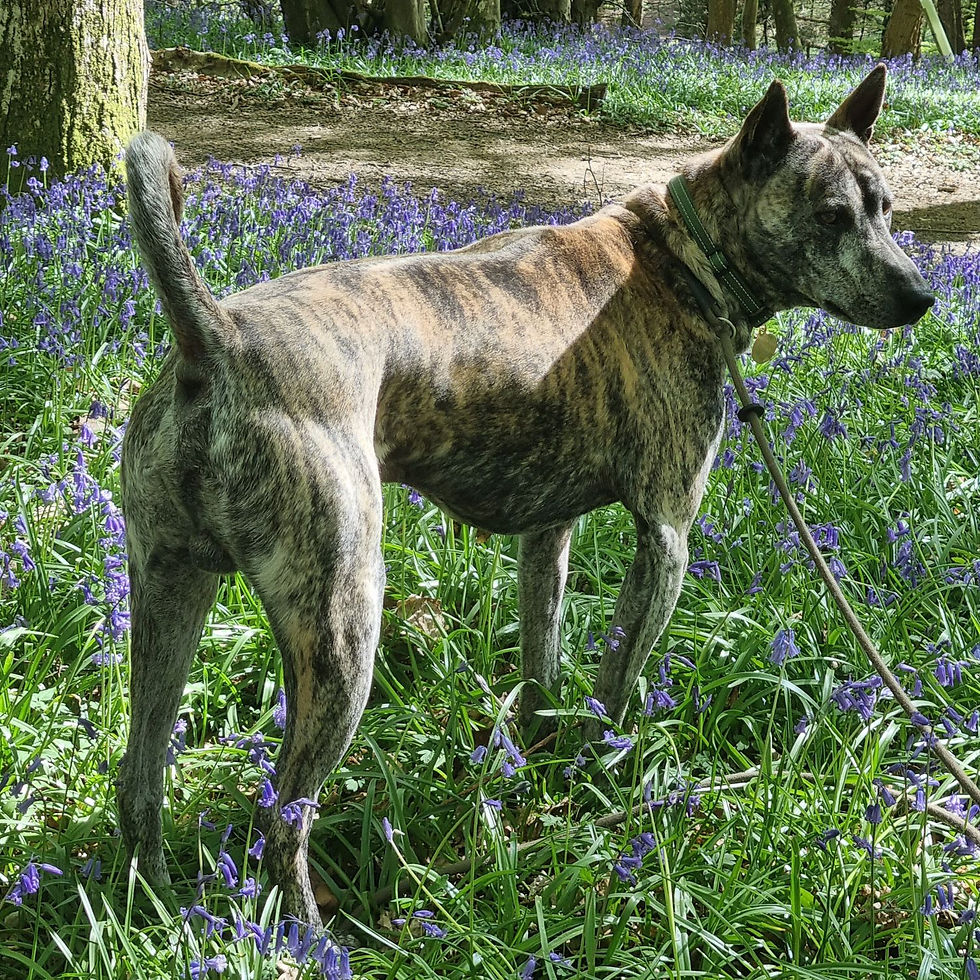
A Different Blueprint Entirely
To fully appreciate what sets this breed apart, it helps to contrast it with what most people are familiar with. Modern companion breeds—retrievers, spaniels, herding dogs, and many designer mixes—have been developed over generations to work in close partnership with humans. Their instincts have been shaped to prioritize responsiveness, repetition, and a willingness to defer to human guidance. Success in these breeds often looks like consistency: the ability to perform the same behavior reliably, regardless of context.
The Phu Quoc Ridgeback operates on a different blueprint.
As a landrace or primitive-type dog, it developed in conditions where survival depended on independent judgment. There was no handler directing movement, no structured repetition reinforcing behavior. Instead, the dog had to interpret its environment, assess risk, and act accordingly. That legacy is still very much present today.
This is why the breed often feels “different” in ways that are difficult to articulate. It is not just about energy level or intelligence. It is about how that intelligence is expressed. Rather than seeking instruction, the dog is constantly evaluating:
What is happening around me?
What matters right now?
What action makes the most sense in this moment?
That internal dialogue does not shut off simply because the dog now lives in a domestic setting. It continues, quietly shaping every decision the dog makes.

The Mislabeling of “Stubbornness”
One of the most common descriptions owners use is that their dog is “smart but stubborn.” It is an understandable conclusion, especially when a dog appears to know a behavior but chooses not to perform it. However, labeling this as stubbornness misses what is actually happening beneath the surface.
A Phu Quoc Ridgeback is not refusing for the sake of defiance. It is evaluating. It is determining whether the behavior being asked of it is relevant in the current context. If the request lacks clarity, consistency, or meaning, the dog does not automatically comply. Instead, it opts out.
This is where many traditional training approaches begin to break down. Methods that rely heavily on repetition assume that the dog’s primary goal is to perform the behavior correctly. For this breed, the goal is not correctness—it is functionality. If a behavior does not serve a clear purpose, it will not hold.
This is also why you may see a dog that performs beautifully in one environment and appears unreliable in another. The issue is not memory. It is context. The dog does not generalize behavior in the same way many modern breeds do. Each new environment is processed as a new set of variables, and the behavior must be re-evaluated within that framework.

Why More Exercise Is Not the Answer
When behavioral issues begin to surface—restlessness, reactivity, destructiveness—the first instinct for many owners is to increase physical exercise. It is a logical response, and one that is often recommended broadly across dog ownership.
But with the Phu Quoc Ridgeback, this approach only addresses part of the equation.
This is a dog that is not just physically capable, but mentally active. You can run the dog for miles, engage in high-intensity play, and still find that the behaviors you are trying to resolve persist. In some cases, they may even intensify. That is because physical fatigue does not equate to mental fulfillment.
A working mind that is not given direction does not become quiet—it becomes creative.
You may begin to see behaviors such as:
Persistent attempts to escape or explore beyond boundaries
Heightened alertness to every movement or sound in the environment
Difficulty settling, even after significant physical exertion
Reactive responses to stimuli that seem disproportionate
These are not signs of a “bad” dog. They are signs of a mind that is searching for purpose and not finding it in the structure of its current environment.

The Role of Structure and Meaning
If physical exercise alone is not the solution, what is?
The answer lies in structure and meaning. Not rigid control, but clear, consistent frameworks that help the dog understand how to exist within its environment.
Structure provides predictability. It answers the dog’s constant internal question: what matters right now?
This can take many forms in daily life:
Controlled entry and exit through thresholds, reinforcing patience and awareness
Structured walks where the dog is engaged with you and its environment, rather than simply moving forward
Consistent routines that reduce uncertainty and help the dog anticipate what comes next
Clear boundaries around space, access, and behavior within the home
When these elements are in place, the dog begins to relax—not because it is tired, but because it no longer needs to constantly figure everything out on its own. Equally important is the concept of meaning. The dog needs to feel that what it is doing has a purpose. This does not require elaborate training programs or specialized activities. Purpose can be woven into everyday life, as long as it is intentional.
A walk is not just a way to expend energy. It is an opportunity to practice awareness, engagement, and impulse control. A moment at a doorway is not just a pause—it is a chance to reinforce patience and clarity. These small interactions, repeated consistently, build a framework that the dog can rely on.

Engagement Over Control
One of the more subtle but important shifts owners must make is moving away from control as the primary goal. Attempts to control every aspect of the dog’s behavior often lead to frustration on both sides. The dog resists because it is being constrained without understanding, and the owner becomes increasingly forceful in response.
Engagement offers a different path.
When the dog is engaged—when it is aware of you, connected to you, and interested in what you are communicating—cooperation follows more naturally. This does not mean the dog becomes submissive or overly dependent. It means that the relationship becomes a point of reference for the dog’s decision-making.
Building this kind of engagement takes time and consistency. It is developed through shared experiences, clear communication, and the steady reinforcement of boundaries and expectations. It cannot be rushed, and it cannot be faked.

The Importance of Decompression
A working mind cannot remain active indefinitely without consequence. Just as important as engagement and structure is the ability for the dog to disengage and settle.
Decompression is often overlooked, but it plays a critical role in maintaining behavioral stability. Without it, the dog remains in a heightened state of awareness, which can lead to increased reactivity and poor decision-making.
Intentional downtime—calm, structured, and free from constant stimulation—allows the dog to reset. It teaches the dog that it is safe to relax, that not every moment requires action or vigilance. Over time, this becomes a learned behavior, just as much as any trained command.

A Shift in Perspective
For many owners, there comes a moment when things begin to change. It is not when the dog suddenly becomes perfectly obedient, nor when every behavior is under control. It is when the owner’s perspective shifts.
Instead of asking, “How do I make my dog listen?” the question becomes, “How do I guide this mind?”
That shift reframes every interaction. Training becomes less about correcting mistakes and more about building understanding. Frustration gives way to curiosity. The relationship deepens, not because the dog has changed, but because the owner has begun to see the dog more clearly.
Final Thought
The Phu Quoc Ridgeback does not fit neatly into the expectations most people have of a pet dog, and it was never meant to. It does not offer blind obedience, and it does not respond well to being treated as something it is not. What it offers instead is something far more meaningful: the opportunity to engage with a thinking, aware, and independent animal on a deeper level.
When given clarity, structure, and purpose, this breed does not simply comply—it participates. It becomes a partner rather than a follower, responsive not out of obligation, but out of understanding.
For those willing to make that shift, the reward is not just a well-behaved dog, but a relationship built on mutual respect and connection. And in the end, that is far more valuable than obedience alone.

Want to learn more about the Phu Quoc dog and strengthen our community?
Join us on the Facebook Phu Quoc Dog Forum:
Where to get more information:
Phu Quoc Ridgeback Kennel Club


Comments