

Tết, Tails, and Tradition: The Phú Quốc Dog at the Threshold of the Lunar New Year
- Phu Quoc Ridgeback Kennel Club

- Feb 16
- 6 min read

Tết, Tails, and Tradition: The Phú Quốc Dog at the Threshold of the New Year 🧧🐕
Vietnamese Tết Nguyên Đán, the Lunar New Year, is more than a holiday; it is the soul of the nation compressed into days of profound ritual, vibrant celebration, and spiritual renewal. It is a temporal threshold where the past is honored, the present is purified, and the future is beckoned. Every gesture carries meaning. Every action—performed or deliberately withheld—is believed to shape the year to come.
Within this intricate tapestry of tradition—from the bustling chợ Tết overflowing with flowers, fruits, and red banners, to the hushed reverence of ancestral altars glowing with incense—exists a powerful and often overlooked symbol: the Phú Quốc Dog. This sleek, ridge-backed hunter from Vietnam’s southern island paradise is not merely a pet. In the context of Tết, it becomes a living emblem of loyalty, protection, prosperity, and continuity—standing at the intersection of the physical and the spiritual, central to the holiday’s deeper purpose.
Closing the Old Year: Settling Debts and Restoring Balance
Before the new year can begin, the old one must be completed.
Vietnamese tradition holds that all debts and unresolved matters must be settled before Tết—financial obligations, broken promises, lingering conflicts. To carry unfinished business into the new year is to invite instability and misfortune. Apologies are made. Accounts are balanced. Harmony is restored wherever possible.
This moral and emotional clearing mirrors the physical cleansing of the home. In the days before Tết, families engage in dọn nhà, scrubbing floors, washing walls, and discarding broken items to remove the residue of bad luck. Yet once Tết officially begins, the broom is put away. Sweeping on the first day of Tết is avoided, as it is believed to sweep away newly arrived fortune.
The home, now purified and still, becomes a protected space. The Phú Quốc Dog—deeply territorial, watchful, and calm—settles naturally into this moment of pause, instinctively guarding what has been carefully restored.

The Architecture of Tết: Where the Tangible Meets the Invisible
Tết is a festival of duality, balancing the visible and the unseen.
Preparations are energetic and communal. Kitchens buzz with the making of bánh chưng and bánh tét, sticky rice cakes symbolizing Earth and Sky. Homes are decorated with hoa đào in the north and hoa mai in the south. New clothes are laid out, symbolizing renewal, dignity, and a clean beginning.
Yet beneath this activity lies Tết’s spiritual core. This is the time when Ông Táo, the Kitchen God, ascends to report the household’s deeds to the Jade Emperor. It is when ancestors are invited home through cúng ông bà, welcomed with offerings and incense. And it is when extraordinary care is taken with xông đất—the first person to cross the threshold in the new year.
At its heart, Tết is about safeguarding the family unit—both the living household and the ancestral lineage—as it steps into the unknown future.

Thresholds, Zodiac Harmony, and the First Footstep
The first guest to enter the home on Tết is believed to set the tone for the entire year. Families often choose this person deliberately, ensuring their zodiac sign is compatible with that of the homeowner or business owner, and that they embody good character, luck, and positive energy.
Long before this practice was formalized, dogs fulfilled the role of threshold guardians.
Vietnamese folklore has long regarded dogs as auspicious protectors, believed to sense malevolent forces invisible to humans. The Phú Quốc Dog, with its distinctive ridge of hair growing opposite along its spine, intensified this belief. The ridge is often mythologized as a “dragon’s crest,” a mark of supernatural awareness and power.
During Tết—when the veil between worlds is thought to be thin—a Phú Quốc Dog resting at the doorway is more than a deterrent to intruders. It is a spiritual sentinel, believed to block tà ma (evil spirits) from entering alongside the new year. Its presence reinforces the sanctity of the threshold, allowing only favorable energy to pass.

The Mâm Ngũ Quả: Prosperity, Protection, and the Guardian’s Role
At the center of the ancestral altar sits the mâm ngũ quả, the five-fruit tray—a visual prayer for prosperity, harmony, and protection in the coming year. While the number five reflects the five elements—wood, fire, earth, metal, and water—the fruits themselves are chosen with intention, their meanings shaped by language, region, and belief.
In southern Vietnam, the tray often forms the phrase “Cầu – Dừa – Đủ – Xài,” meaning “May we have enough to live comfortably.” Mãng cầu (custard apple) represents wishes and prayers; dừa (coconut) symbolizes sufficiency; đu đủ (papaya) abundance; and xoài (mango) prosperity and the ability to spend freely. Fruits like thơm (pineapple) or sung (fig) may be added to invoke good reputation and wealth. Bananas are often avoided, as their name can imply misfortune or slipping away.
In northern Vietnam, the symbolism emphasizes structure and guardianship. A cluster of green bananas frequently forms the base of the tray, shaped like protective hands cradling the offerings above—symbolizing shelter, unity, and familial protection. At the center may sit a pomelo or Phật thủ (Buddha’s hand citron), representing divine blessing and spiritual safeguarding. Oranges, tangerines, persimmons, apples, or pears complete the arrangement, chosen for balance, peace, and success.
Central Vietnam blends both approaches, guided by sincerity and availability rather than strict formula. What matters most is the intention behind the offering—an honest presentation of the household’s best, given with respect.
Across all regions, the mâm ngũ quả is not merely about abundance—it is about defended abundance. The fruits represent what the family hopes to grow and protect. Historically, this protection was not abstract. A strong household depended on capable guardians, and the Phú Quốc Dog was among the most valued.
Renowned for its hunting prowess in the jungles of Phú Quốc Island, the dog contributed directly to the household’s ability to provide. Its strength, health, and vigilance mirrored the family’s own stability. The altar displayed prosperity as a prayer; the dog embodied prosperity as a living safeguard. Together, they formed a complete system of hope and protection—one spiritual, one tangible.

Words, Wishes, and Lì Xì
On Tết mornings, children line up before their elders to offer New Year wishes—long, carefully crafted blessings for health, longevity, and success. This ritual is both sincere and playful, as children compete to deliver the most eloquent words before receiving lì xì, red envelopes filled with lucky money.
Throughout this exchange, the family dog lingers nearby, absorbing the rhythm of familiar voices. The Phú Quốc Dog, deeply attuned to household energy, thrives in these multigenerational gatherings—calm amid excitement, present without intrusion.
Games, Laughter, and Living Continuity
As formality gives way to celebration, games like Bầu Cua Cá Cọp erupt into laughter and friendly superstition. Coins clatter, cheers rise, and fortunes are jokingly read into every roll of the dice.
The dog moves quietly through the scene—approaching, retreating, observing—embodying balance. Neither removed nor overwhelmed, the Phú Quốc Dog mirrors the rhythm of Tết itself: joyful, grounded, and watchful.
A Living Guardian of Heritage
In an era of globalization and distance, Tết serves as an anchor to Vietnamese identity. The Phú Quốc Dog, a living artifact of Vietnam’s ecological and cultural history, strengthens that anchor. For the Vietnamese diaspora, its image evokes deep nostalgia—of homes once filled with incense and laughter, of thresholds guarded, of traditions intact. The dog becomes not only a guardian of the household, but a guardian of cultural memory itself.

Welcoming the New Year, Together
Vietnamese Tết is a ritual of renewal built upon protection, prosperity, and ancestral continuity. The Phú Quốc Dog stands at the center of these pillars—bridging the practical and the mystical, the home and the wild, the present and the ancestral past.
As families gather beneath blooming hoa đào and hoa mai, the silent, watchful presence of the Phú Quốc Dog—real or remembered—completes the picture. It is the assurance that the home is secure, the lineage honored, and the new year welcomed with intention.
As the old year fades and the new one opens its doors, we wish all of our readers a year filled with luck that finds you when you least expect it, love that anchors you through every season, health that sustains both body and spirit, prosperity born of honest effort, and happiness rooted in home and family. May your thresholds be well guarded and your blessings endure.

Chúc Mừng Năm Mới!
Want to learn more about the Phu Quoc dog and strengthen our community?
Join us on the Facebook Phu Quoc Dog Forum:
Where to get more information:
Phu Quoc Ridgeback Kennel Club
Please check out our Tết gallery below!

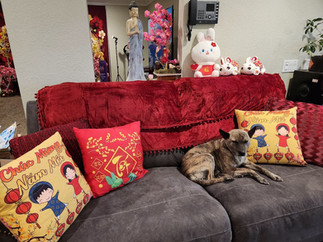
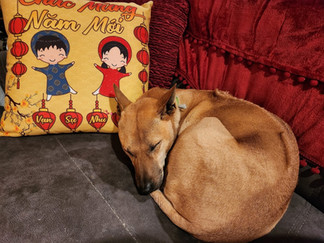
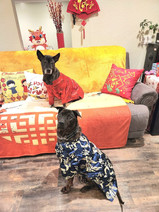
Some images of Phu Quoc dogs celebrating Tết with their families.








Comments